Combat Cruiser
- 4.7
- Rating
- 5.00M
- Installs
- Free
- Price

 Analysis by App-foxy
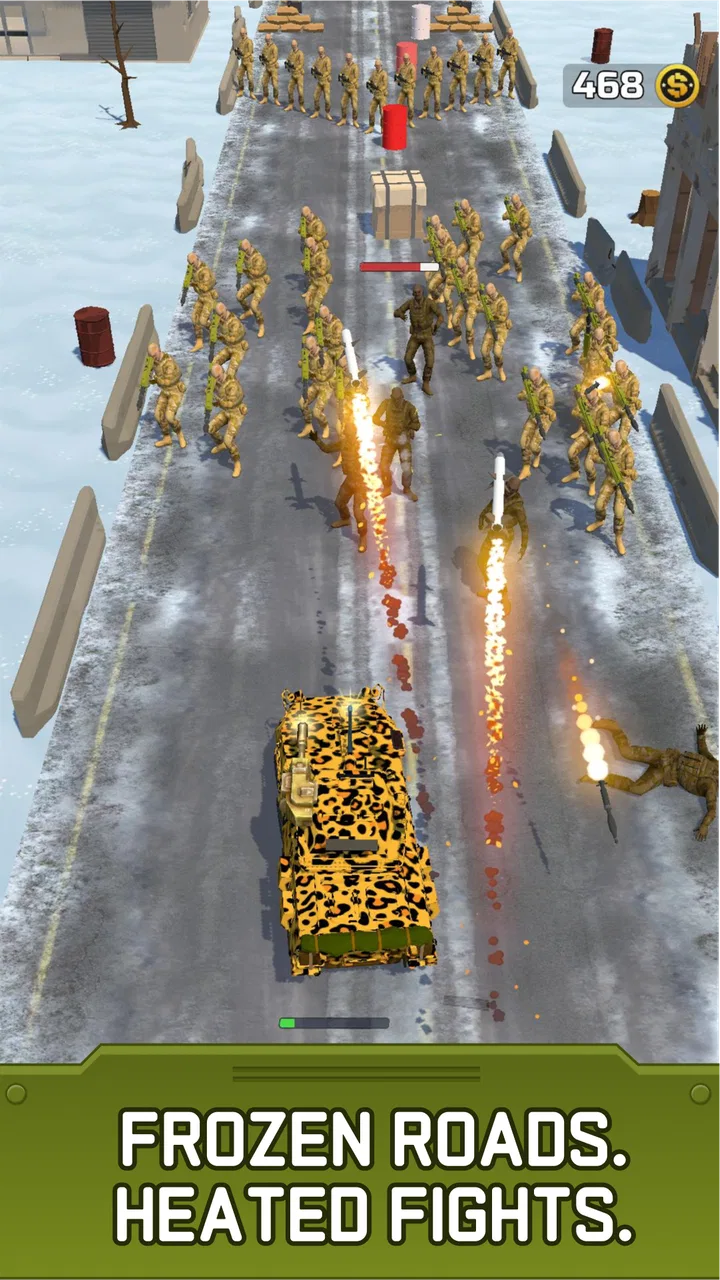
Combat Cruiser is the kind of action game I reach for when I want a short burst of hands-on play rather than a large, story-heavy commitment. Its central idea is simple: assemble as you go, then use what you build to handle combat. That gives each session a practical rhythm, because I am not only reacting to danger; I am also making quick decisions about how my cruiser should come together.
Developed by VOODOO, the game is free to download and sits in the action category. It has a 4.7 average from around 62 thousand ratings and has passed 5 million installs, which suggests that its straightforward combat loop has found a broad audience. My impression is that its appeal comes less from complicated presentation and more from the immediate question of what to add next and whether that choice will help me survive the next encounter.
The store summary, “Assemble as you go,” is a useful clue to the experience. This is not an action game where preparation happens entirely before a mission. Building and fighting are connected, so the best decisions are often made under pressure. That makes it approachable, but it also means the game rewards attention more than passive play.
You May Also Like

 Blood Strike: 2.5 Anniversary
Blood Strike’s Loadouts Turn Every Drop Into a Tactical Gamble
A close look at Blood Strike’s custom loadouts: how fast access to signature weapons reshapes its battle royale rhythm, rewards preparation, and narrows the gap between fights.

 Pandora - Music & Podcasts
Pandora’s Music Is Easy to Start, but Harder to Recover
Pandora’s strength is its low-effort path from a seed to a station. Its weak spot is how much confidence it asks you to place in connection, setup, and quiet recovery.

 8 Ball Pool
 Is Built on Rivalries, Rematches, and Routine
A close look at the rivalries, rematches, shared routines, and unanswered safety questions that turn a quick pool match into a persistent mobile community.

 Samsung Music
’s Quiet Strength Is Playing What You Already Own
Its reach comes less from spectacle than from dependable access to a personal library. That simplicity is both the app’s strongest retention engine and its ceiling.

 AccuWeather: Weather Radar
AccuWeather Review: A Quick, Clear Forecast for Everyday Decisions
For everyday plans, the best forecast is the one you can understand quickly. AccuWeather makes rain timing, radar, and local conditions easy to act on, with a few trade-offs.

 Hill Climb Racing
Why Hill Climb Racing Still Turns Crashes Into One More Run
A tiny car, a bumpy hill and one more upgrade: Hill Climb Racing keeps resurfacing because its simple chaos makes every near-miss feel personal.
More From Our News Desk



How Combat Cruiser feels during real play
I find the most useful way to judge this game is to watch how a small building choice changes the next stretch of action, rather than aiming for a perfect cruiser straight away. That makes each attempt feel like a practical test: I can notice what helped, adjust one decision, and see whether the result feels steadier. From there, the key question is what makes a run satisfying enough to start another.
Speed expectations: quick decisions rather than endless complexity
I would describe the pace as brisk in the way mobile action games should be brisk: the important choice arrives quickly, the result is easy to understand, and I can get back into another attempt without a long setup. The “assemble as you go” structure keeps the opening moments from feeling like a menu exercise. I am usually thinking about the next useful addition instead of spending too long arranging a perfect build before anything happens.
That simplicity is a strength for casual sessions. If I have a few minutes while waiting for an appointment, I can start playing without needing to remember a large collection of systems. The game’s Combat Cruiser identity is clear from the beginning: the cruiser is both my weapon platform and the object I am shaping during play. The action feels more immediate than a traditional strategy game, while the assembly decisions give it more purpose than a basic tap-to-attack title.
There is a trade-off, though. Players who want a deep campaign, elaborate character development, or a highly technical combat simulator may find the format too focused. The game is built around a compact loop, so its enjoyment depends on whether you like making small tactical choices repeatedly. I would not choose it as a replacement for a long-form console-style action game. I would choose it when I want a clean mobile challenge that starts quickly.
One useful way to play is to treat every assembly decision as a response to the next problem rather than as a permanent commitment to one ideal design. Early on, I prefer choices that keep the cruiser broadly useful. A narrowly specialized setup can look attractive, but it may leave me uncomfortable when the situation changes. This is one of the less obvious lessons of the game: flexibility is often more valuable than building toward an impressive-looking cruiser that only works under one condition.
Heavy-use moments: where attention matters most
The busiest moments are not necessarily the ones with the most visual activity. They are the points where I have to decide whether to improve immediate combat strength or invest in a better arrangement for what comes next. That tension gives the assembly mechanic its purpose. If I always choose the strongest-looking option in front of me, I can end up with a cruiser that feels powerful for a moment but awkward to manage afterward.
During longer play sessions, I notice that decision fatigue becomes more important than raw reflexes. The individual choices are easy to understand, but making them repeatedly can lead to careless selections. My practical advice is to pause mentally after a difficult encounter and ask what actually caused the problem. Was the cruiser lacking power, poorly balanced, or simply built around the wrong short-term priority? That small review helps prevent the next attempt from becoming the same mistake with different parts.
This is also where the game works well for players who enjoy gradual improvement. I do not need to master everything at once. I can focus on recognizing which assembly choices make combat feel controlled and which ones create unnecessary pressure. A useful workflow is to experiment deliberately: keep one part of the approach familiar, then change one decision at a time. That makes it easier to understand what helped instead of treating every successful run as luck.
For an everyday scenario, I can imagine playing during a commute or a short break, then stopping after an unsuccessful attempt rather than immediately chasing the loss. Because the game is free and designed around a direct action loop, it is easy to open casually. But the best use of that short session is not always “one more try.” Sometimes the smarter choice is to remember the assembly decision that caused trouble and return later with a clearer plan.
Reliability: a dependable loop with a clear learning curve
My overall impression of reliability is tied to the game’s focused design. There are fewer layers to keep track of than in a large role-playing game, so the basic experience is easy to understand: assemble the cruiser while moving through combat, then adjust your decisions based on what happened. That clarity makes it easier to return after a few days away without feeling lost.
The current version is 2.1.10, and the game requires Android 8.0 or later. Those details matter if I am checking an older phone before installing. A compatible operating system does not automatically guarantee a perfect experience on every device, but the requirement is not aimed only at the newest hardware. I would still leave some free storage and close demanding apps before a long session, especially on a phone that already struggles with other games.
One point I appreciate is that the game does not require me to understand a complicated backstory before I can enjoy it. That improves recovery after a break. I can return to the action and rely on the immediate assembly choices instead of trying to remember a plot, a large inventory, or a long chain of objectives. For me, that makes it more dependable as a pick-up-and-play game than many action titles that demand regular commitment.
Reliability also includes how forgiving the game feels after a mistake. Combat Cruiser encourages experimentation, but experimentation is only enjoyable when I can learn from failure. I found the most useful mindset was to see a failed attempt as information about the cruiser’s construction rather than as a reason to repeat the same setup faster. Players who dislike restarting or adjusting their approach may find this loop frustrating, while players who enjoy testing ideas will probably find it satisfying.
Device constraints and spending decisions
The age rating is Everyone 10+, which makes the game suitable for a broad audience while still signaling that it is an action experience rather than a purely child-focused title. The price is free, so trying it does not require an upfront purchase. There are in-app purchases ranging from $0.89 to $109.99 per item, however, and that is the main point I would discuss with anyone who is careful about mobile spending.
I recommend deciding on a personal spending limit before playing for a long time. Free-to-start action games can make small purchases feel harmless, especially after a frustrating attempt, but repeated small decisions can change the cost of the experience. I would first judge whether the core assembly-and-combat loop is enjoyable without buying anything. If it is not fun on its own, spending will not fix that problem.
On the device side, the minimum operating system requirement gives Android users a useful first check. Beyond that, performance can depend on the phone’s age, background activity, and how long I play continuously. I would be cautious with an older device that already becomes warm during games. Even when a title launches correctly, heat, battery drain, or reduced responsiveness can make rapid decisions less comfortable. Those are practical constraints worth considering before treating it as a regular daily game.
I also would not install it expecting a tiny, completely consequence-free distraction. The game may be easy to start, but its decisions invite repeat attempts, and repeat attempts can turn a short break into a longer session. That is not a flaw by itself, yet it matters for people who want a game they can put down immediately after every round. For that audience, a slower puzzle game may be a better fit.
Recovery after mistakes and after time away
Combat Cruiser is at its best when I use failure as a way to refine the next cruiser rather than simply pushing through with the same plan. The assembly system gives me a natural recovery path: identify the weak point, make a different choice, and see whether the next attempt feels more stable. That process is more interesting than a game where losing only means repeating an identical sequence.
My advice is to remember the shape of the problem, not every tiny detail. If combat felt overwhelming, I would ask whether the cruiser lacked a balanced setup or whether I committed too early to one kind of improvement. If the run felt underpowered, I would look at the timing of the assembly decisions instead of assuming that the answer is always “choose more strength.” This approach keeps the game from becoming a blind search for a single perfect arrangement.
Returning after time away is relatively comfortable because the main idea is so direct. I do not need to rebuild a mental map of a huge world. I can begin with a conservative approach, observe how the cruiser responds, and then take more risks once the rhythm returns. That makes it suitable for people who play in bursts rather than every day.
Still, recovery is not the same as instant mastery. The game’s simplicity can make mistakes feel personal because the choices are visible and immediate. If I lose after making a poor assembly decision, I usually know where the pressure began. Players who prefer games that protect them from early errors may want something more forgiving. Players who like seeing a clear connection between decision and outcome will probably value that honesty.
Who should play it, and who should skip it?
I would recommend Combat Cruiser to someone who enjoys action games with a light construction layer. It is especially suitable for players who like making quick choices, testing different approaches, and improving through short attempts. It also works for people who want something more interactive than an idle game but less demanding than a large competitive action title.
It is a good choice for a player who often has irregular free time. I can start without a long narrative commitment, and the basic objective is easy to grasp. The game also gives a reason to replay beyond simply seeing the same screen again: I can change how I assemble the cruiser and judge whether that makes combat more manageable.
I would skip it if my priority is a deep story, extensive exploration, or a highly detailed vehicle simulator. I would also be cautious if I dislike games that ask me to learn through failure. The free entry point is appealing, but the in-app purchase range means families and younger players should use sensible purchase controls. The Everyone 10+ rating does not remove the need for that practical awareness.
Compared with a conventional action game, this one gives more importance to building decisions. Compared with a strategy game, it keeps the action closer to the foreground and avoids making preparation the entire experience. That middle position is its strongest identity. If I want pure reflexes, another action game may feel sharper. If I want detailed planning, a full strategy title may offer more depth. Combat Cruiser is for the space between those two preferences.
What I would do before committing to regular play
I would begin by playing without spending money and by using the first sessions to understand how assembly choices affect the cruiser’s behavior. I would not chase an impressive setup immediately. Instead, I would look for a configuration that remains useful when the situation changes. That gives me a clearer baseline and reduces the temptation to blame every failed run on bad luck.
I would also test the game on the device I plan to use most often, not only on a newer phone or tablet. A short session is enough to notice whether controls feel comfortable, whether the device becomes unusually warm, and whether returning from another app causes any inconvenience. Since the minimum requirement is Android 8.0 or later, owners of older hardware should check compatibility first and then judge the actual experience on their own device.
For longer sessions, I would take breaks before decisions become automatic. The game’s quick rhythm makes it easy to continue after a loss, but tired choices can hide what the assembly system is teaching. A short pause often helps more than immediately starting again. This is a small habit, yet it makes the game feel less repetitive because each attempt has a clearer purpose.
Performance verdict: focused, accessible, and not for every action fan
My final view is positive, with a clear qualification. Combat Cruiser succeeds because it combines immediate action with a construction decision that matters throughout play. The concept is easy to understand, the free price makes trying it simple, and the game’s 4.7 average from around 62 thousand ratings shows that many players respond well to its format. VOODOO has kept the idea focused rather than burying it under unnecessary complexity.
The limitations are just as clear. This is not the right pick for someone seeking a large adventure, a detailed simulation, or endless mechanical depth. The experience depends on enjoying repeated attempts and learning how to assemble more effectively. The in-app purchase range also deserves attention, particularly for anyone sharing a device with children or trying to keep mobile gaming completely free.
I would keep it installed for short action sessions, especially when I want a game that gives me something to think about without demanding a long story commitment. My strongest recommendation is to approach it as a small tactical experiment: build with flexibility, notice why a run failed, and change one important decision at a time. If you enjoy action that rewards adaptation as much as reaction, Combat Cruiser is worth trying; if you want a deeper or more cinematic experience, choose a different game.
FAQs for Combat Cruiser
01What is Combat Cruiser and what kind of gameplay does it offer?
Combat Cruiser is a naval combat game focused on commanding a warship in battles against enemy vessels. Players typically control movement, aim weapons, manage attacks, and try to survive increasingly difficult encounters. The experience combines action with light tactical decision-making, so success depends not only on firing quickly but also on positioning your cruiser, avoiding incoming damage, and choosing the right moment to attack.
02Can I play Combat Cruiser offline, or is an internet connection required?
Combat Cruiser may offer gameplay that can be enjoyed without a constant internet connection, especially during individual missions or basic combat sessions. However, some features may depend on online access, including advertisements, updates, cloud-related services, leaderboards, or multiplayer functions if available in your version. It is best to launch the game once while connected and check which modes remain accessible when your device is offline.
03Is Combat Cruiser free to download, and does it include in-app purchases?
Combat Cruiser can generally be downloaded at no initial cost, but free access does not always mean that every feature is completely unrestricted. Depending on the platform and version, the game may display advertisements or provide optional purchases for upgrades, resources, new equipment, or other conveniences. Review the store listing and payment settings before downloading, particularly if children use the device.
04What devices are compatible with Combat Cruiser?
Compatibility depends on the operating system, device model, and the version currently published by the developer. Before installing Combat Cruiser, check the official Google Play or App Store listing for the required Android or iOS version, storage space, and any hardware recommendations. Older phones may run the game with reduced performance, slower loading, or visual limitations, while newer devices should provide smoother controls and graphics.
05Does Combat Cruiser require advanced skills or previous experience with naval games?
Combat Cruiser is approachable for newcomers because its core objective is straightforward: control your cruiser, engage hostile ships, and complete the assigned battle objectives. Even so, later encounters can require better timing, aiming, movement, and resource management. New players should spend time learning the controls and observing enemy attack patterns before using valuable upgrades, as careful positioning often matters as much as firepower.
Pros
- Simple controls make the game easy to pick up and play.
- Ship upgrades provide a satisfying sense of progression.
- Short battles work well for quick gaming sessions.
- The naval combat has a fun
- arcade-style feel.
- Different weapons encourage varied combat strategies.
Cons
- Later missions can become repetitive without much gameplay variety.
- Some upgrades may require considerable grinding to unlock.
- The small-screen interface can feel crowded during battles.
- Difficulty spikes may frustrate players who prefer a relaxed pace.
- Ads or in-app purchases may interrupt the overall experience.

Combat Cruiser
Gallery